Research and development of phenolic molding plastics for 20 years
About Us
Research and development of phenolic molding plastics for 20 years
For a sandwich maker outer housing, material selection starts with the conditions the finished housing must withstand. Specify its temperature exposure, dimensions, mechanical loads, moisture exposure and electrical function, then evaluate the exact material grade and a moulded sample against those requirements.
We offer PF2A4-161J phenolic moulding compound for sandwich maker outer housings, with raw-material supply and finished-housing moulding available for project discussion. This application focuses on the external housing. Cooking plates, handles and other components require their own evaluation.

Phenolic moulding compound is a thermosetting material. The material described for this application is supplied in powder form and cured during moulding. Specify a moulding compound and a moulded housing when requesting information, so that technical documents for phenolic laminates or sheet materials are not substituted for the intended product.
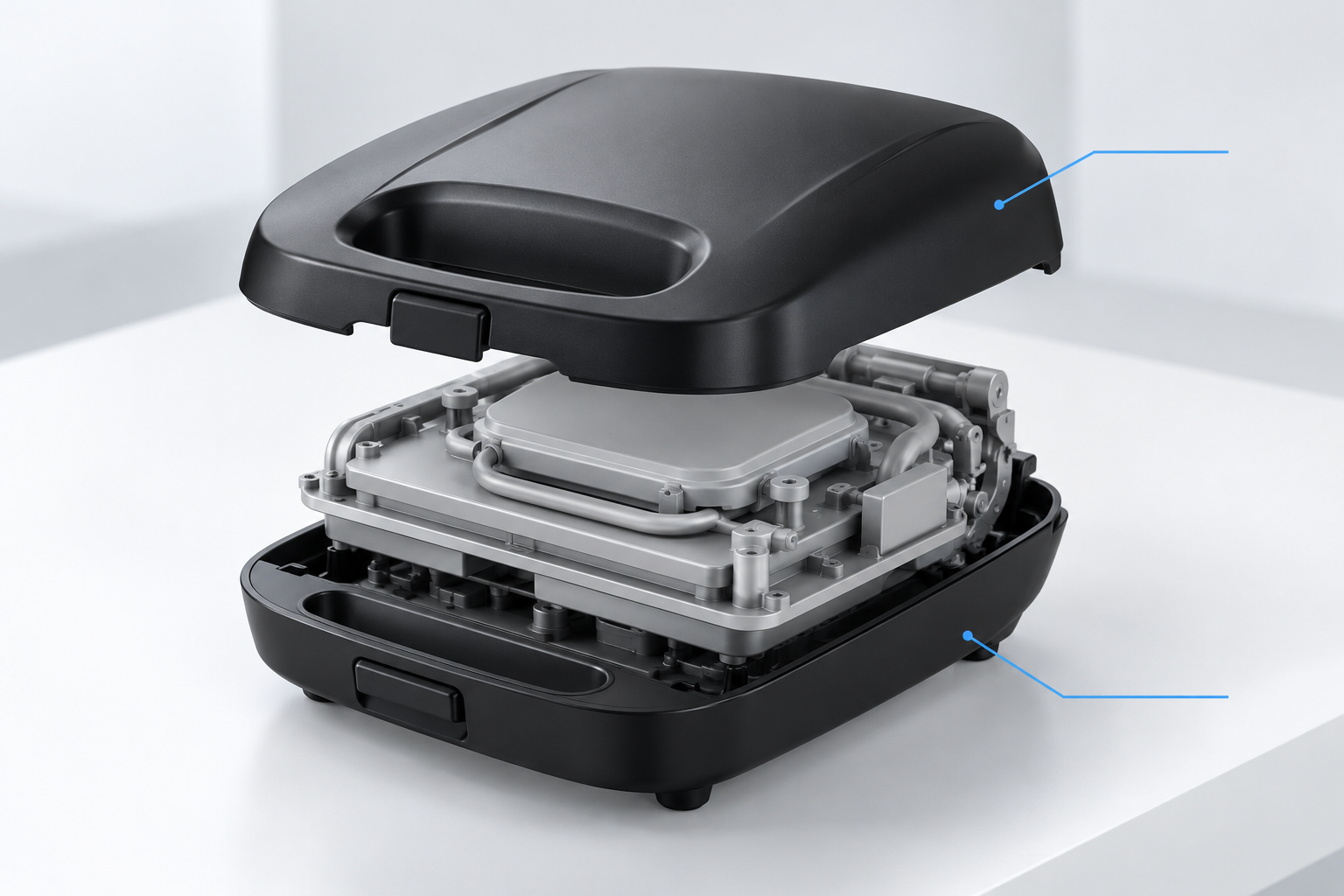
Define whether the proposed housing has any direct or indirect food-contact pathway. The current PF2A4-161J application concerns an external housing and does not establish suitability for direct food contact.
Prepare the drawing and operating requirements before comparing materials. Include:
These inputs make it possible to compare grades for the same housing. Our material selection guide explains how to organise that comparison.
| Question about the housing | Evidence to review |
|---|---|
| Will it retain its shape in service? | Grade-specific thermal data, relevant test conditions and dimensional results from moulded housings |
| Will it meet mechanical requirements? | Material strength data together with tests of the housing and its fastening points |
| Will the dimensions remain acceptable? | Moulding shrinkage information and measurements before and after the specified exposures |
| Will it meet its electrical function? | Reports matching the grade, specimen conditions and relevant moisture or heat exposure |
| Can the moulding process produce the required finish? | Production-trial records covering filling, curing, surface defects and dimensional variation |
A heat deflection temperature is one material-test result. Long-term service temperature and finished-housing performance need evidence covering their own conditions. Review the PF2A4-161J product information for the technical documentation to confirm for this grade.
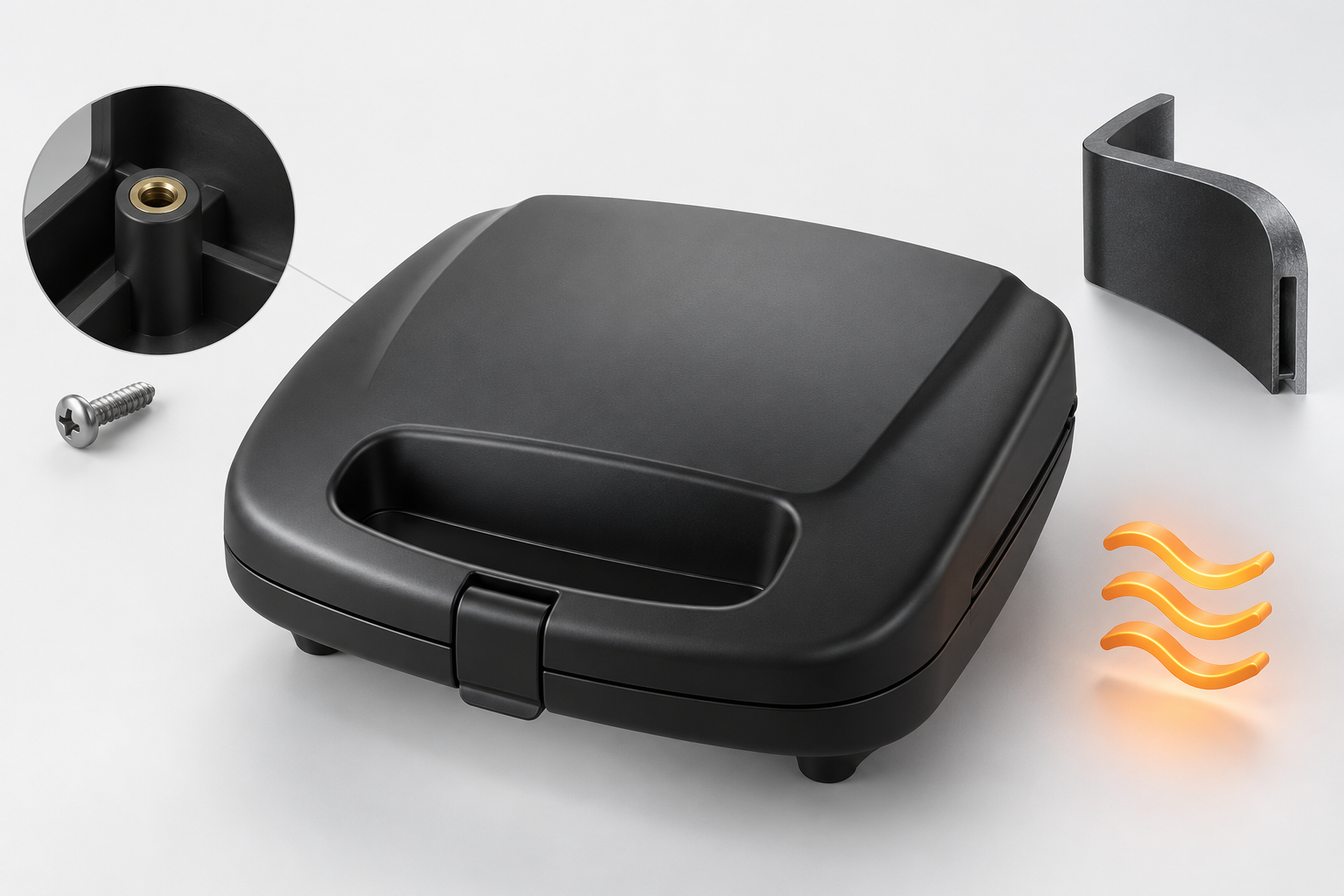
A trial should record the material grade and batch, storage history, mould identification, actual process settings and inspection results. If a housing shows delamination, warpage, cracking or surface defects, identify when and where the defect appears before changing the process or material.
The moulding and troubleshooting guide provides a record-based approach to evaluating these issues. The results of a successful trial should then feed into the validation and supplier qualification plan.
A domestic small-appliance manufacturer reported problems with raw-material batch variation and insufficient heat resistance from its previous supplier. Its sandwich maker housings showed delamination and warpage, with a persistently high defect rate.
The manufacturer switched suppliers and adopted PF2A4-161J. Customer feedback described improved heat resistance and dimensional stability, followed by a supply relationship that has continued for years. This is an anonymous, qualitative application account. For a new housing, agree on its own trial conditions and acceptance criteria.
You can purchase compound for moulding in your own facility or discuss the production of finished housings. Define the drawing, mould ownership, inspection requirements and delivery scope for either route.
For compound orders, production and stock preparation takes 7–10 working days for regular orders and 10–15 for orders of at least 50 tonnes, counted from the first working day after payment confirmation. The minimum order for in-stock compound is one 25 kg bag; custom compounds start at 3–5 tonnes. Tool development, finished-housing trials, transport and customs arrangements are scheduled separately.
Use the sourcing guide to prepare a request for quotation covering the supply route and project requirements.
PF2A4-161J is the grade offered for this outer-housing application. Evaluate its technical documentation and a moulded sample against the requirements of your housing before approving production.
Each component needs an assessment of its function, geometry and exposure. This application establishes the scope for the external housing; it does not establish suitability for cooking plates or other parts.
Send the housing drawing, temperatures, colour, quantity, destination market and required tests. Specify whether you need compound supply or finished housings, and describe the available mould and equipment.
Match the report to the exact grade, colour, specimen thickness, test conditions and document version. Review how its results relate to the finished housing and any separate appliance requirements.
The working-day periods describe production and stock preparation for compound orders, counted from the first working day after payment confirmation. Tooling, sample approval, housing production and shipment are scheduled separately for your project.
 English
 Türkçe
 ไทย
ไทย Tiếng Việt
 العربية (الجزائر)
 العربية (مصر)
 Português
 Español (Perú)
 Español (México)
 Bahasa Melayu
 فارسی
فارسی اردو
اردو العربية (المغرب)
 Bahasa Indonesia
 বাংলা
বাংলা