Research and development of phenolic molding plastics for 20 years
About Us
Research and development of phenolic molding plastics for 20 years
Compare materials against a defined sandwich maker housing, using the same operating requirements and acceptance criteria. A useful comparison combines material data, moulding results, finished-housing tests and the cost of producing an accepted component.
Start with the outer-housing application guide to define the component scope. PF2A4-161J is one phenolic moulding compound offered for this application; its product information identifies the technical documentation to review.
Identify the housing sections closest to the heating plates, critical dimensions, wall thickness changes and fastening points. Record the intended temperature exposure and heating cycles, together with mechanical loads, moisture exposure, appearance and any electrical insulation function.
State the intended food-contact boundary. A material comparison for the external housing should retain that component scope throughout the evaluation.
| Requirement | Compare using |
|---|---|
| Thermal exposure | Grade-specific results under stated conditions and housing temperatures during the intended operation |
| Mechanical integrity | Comparable strength and impact data, plus component and fastening-point results |
| Dimensional stability | Shrinkage information and housing measurements after the specified exposures |
| Moisture and electrical performance | Results identifying conditioning, thickness and relevant exposure |
| Mould filling and finish | Trials of the intended geometry, actual process settings and agreed appearance criteria |
| Manufacturing cost | The full cost of accepted housings at the same quantity and delivery scope |
Keep the units, methods and specimen conditions visible. Where two reports use different conditions, resolve the difference before ranking the results.
For a comparison involving phenolic compound, a heat-resistant thermoplastic or a metal design, identify the exact candidate grade or material and the proposed housing structure. Check whether each option can meet the same requirements and whether it requires different tooling, assembly or validation.
For phenolic grades, request information on thermal properties, mechanical properties, shrinkage, flow and surface finish. A supplier description such as general purpose, heat resistant or reinforced should be supported by the relevant grade documentation. Confirm the filler system rather than inferring it from a product name.
If PF2A4-161J and PF2A2-141 are candidates, obtain both technical data sheets and compare their conditions before making a performance claim. Trial the grades in the intended housing geometry where the choice depends on filling, fastening points or visible finish.
Thin sections, fastening points and changes in wall thickness deserve explicit trial and inspection criteria. Record whether each candidate fills the intended geometry and meets the agreed dimensions after moulding and subsequent exposure.
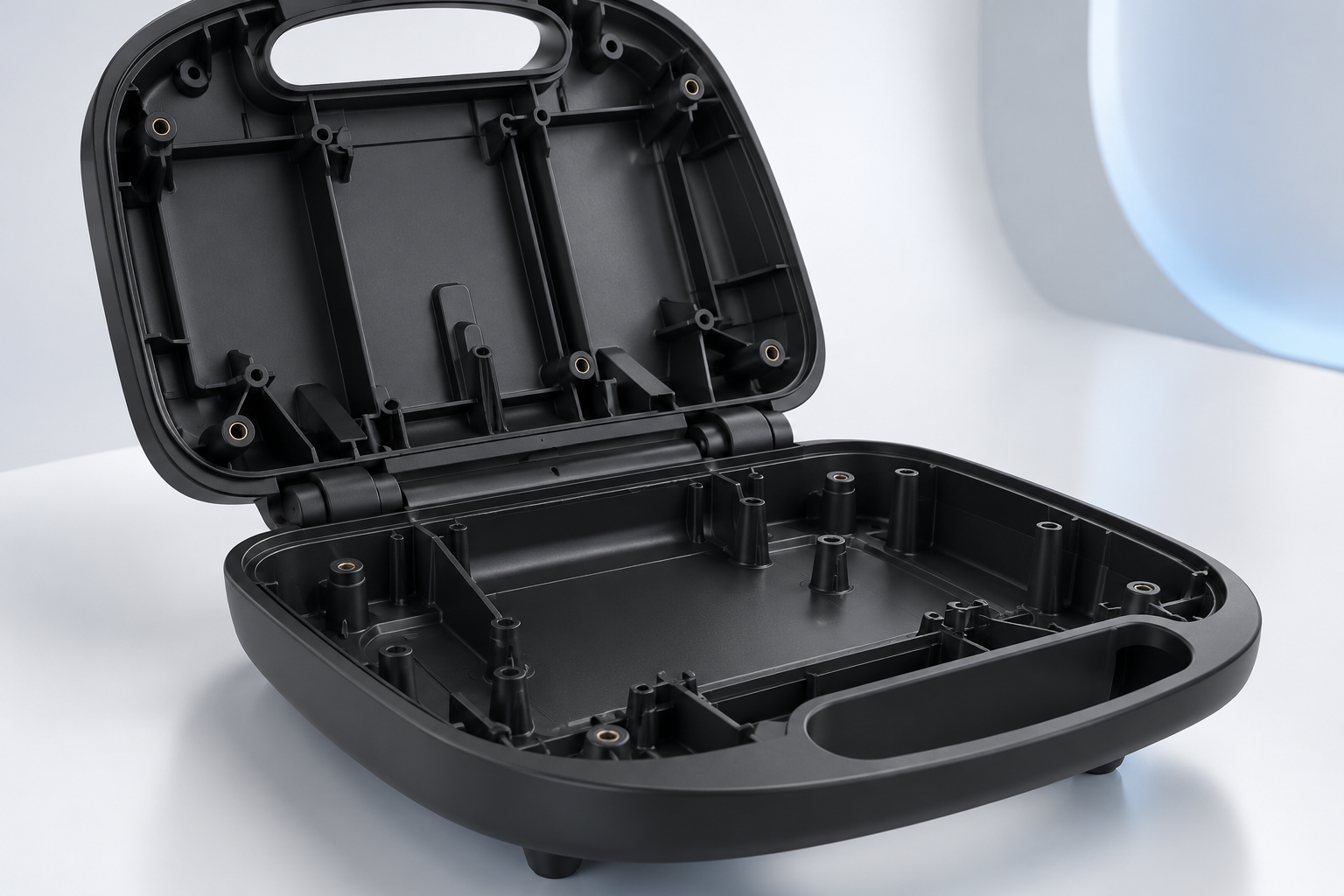
For a visible housing, define the colour, surface appearance and acceptable defects alongside mechanical requirements. A satisfactory surface alone does not complete the housing evaluation. Use the moulding and troubleshooting guide to organise the trial records.

Include material consumption, equipment, tooling, cycle time, finishing, inspection, rejected parts and delivery scope. Distinguish a compound quotation from a quotation for accepted finished housings.
Use measured trial data for cycle time and reject rates where available. The sourcing guide explains the responsibilities and quotation inputs for compound supply and outsourced housing moulding.
Retain the comparison table, exact candidate identities, trial conditions and results. Then apply the validation and supplier qualification guide to the selected material and production route.
Send the drawing, exposure conditions and candidate documentation when requesting a material discussion. These inputs allow the comparison to address the housing you intend to produce.
 English
 Türkçe
 ไทย
ไทย Tiếng Việt
 العربية (الجزائر)
 العربية (مصر)
 Português
 Español (Perú)
 Español (México)
 Bahasa Melayu
 فارسی
فارسی اردو
اردو العربية (المغرب)
 Bahasa Indonesia
 বাংলা
বাংলা