Research and development of phenolic molding plastics for 20 years
About Us
Research and development of phenolic molding plastics for 20 years
PF2A4-161J is the designation under which our phenolic moulding compounds are listed: thermosetting powders filled mainly with wood flour, offered by grade for different performance requirements and moulding processes. We supply the compound and can discuss moulded parts to suit a defined project.
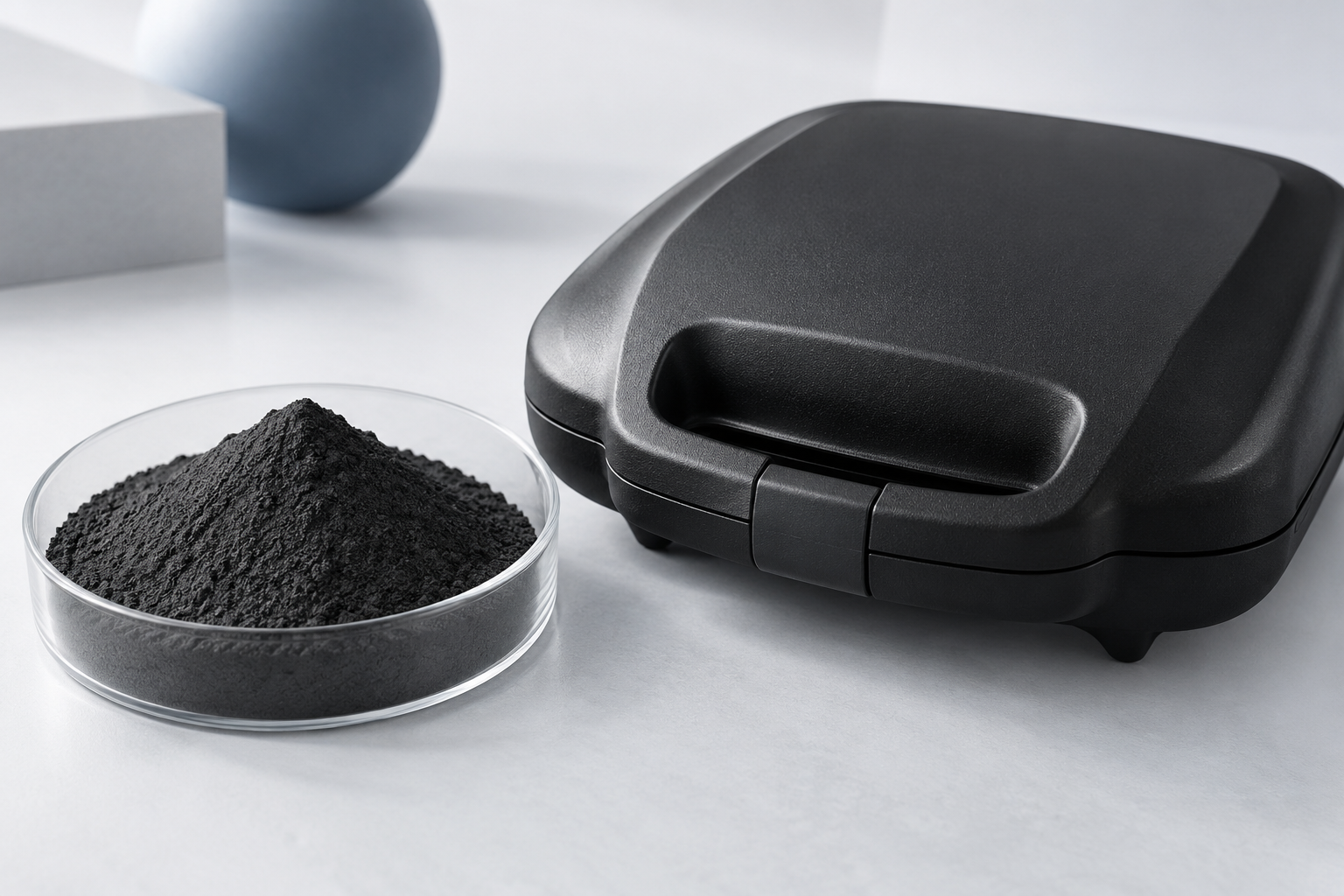
The grades currently listed under this designation are collected below with their images and links; each grade's own page remains the working record for its data. Selection should be based on the housing drawing, operating conditions and technical documentation for the exact grade. The application guide explains the information to define before evaluating a housing material.
The comparison table below is transcribed from our current product listings for this family; values are pending verification against source documents.
| sentire | Unit | PF2A1-131 | PF2A2-141/141J | PF2A2-151/151J | PF2A2-161/161J |
| 1. Performance of molding materials | |||||
| Volume coefficient | ≤ 3.0 | ≤ 3.0 | ≤ 3.0 | ≤ 3.0 | |
| Flow | mm | 100-160 | 120-180 | 120-180 | 120-180 |
| 2.Main properties of molded products | |||||
| Density | g/cm3 | 1.40-1 | 1.35-1.45 | 1.40-1.45 | 1.35-1.45 |
| Molding shrinkage | % | 0.5-0.8 | 0.5-0.8 | 0.6-0.9 | 05-0.8 |
| Tensile broken chain stress | Mpa | ≥ 40 | ≥ 40 | ≥ 40 | ≥ 40 |
| Bending strength | Mpa | ≥ 70 | ≥ 80 | ≥ 80 | ≥ 80 |
| Simply supported beam impact strength | ≥ 4.5 | ≥ 4.5 | ≥ 4.5 | ≥ 4.5 | |
| Simply supported beam notched impact strength | ≥1.3 | ≥ 1.4 | ≥ 1.4 | ≥ 1.4 | |
| Load deformation temperature Tf1.8 | ℃ | ≥ 160 | ≥160 | ≥ 160 | ≥ 160 |
| Load deformation temperature Tf8.0 | ℃ | ≥ 115 | ≥ 115 | ≥ 115 | ≥ 115 |
| Flammability (hot rod) | ≤ BH2-10 | ≤BH2-10 | ≤BH2-10 | ≤BH2-10 | |
| Dielectric loss factor tan δ 100 | __ | ≤0.1 | ≤0.1 | ≤0.1 | |
| Dielectric loss factor tan81M | __ | ≤0.1 | ≤0.1 | ≤0.1 | |
| volume resistivity | Ω -cm | __ | ≥1012. | ≥1012. | ≥1012. |
| surface resistivity | Ω | ≥109. | ≥1011. | ≥1011. | ≥1011. |
| Electrical strength | KV-mm | ≥ 10 | ≥ 10 | ≥ 10 | ≥10 |
| Electric trace resistance index | ≥ 125 | ≥125 | ≥125 | ≥125 | |
| Water absorption | mg | ≥100 | ≥100 | ≥100 | ≥100 |
A grade may appear under more than one classification. Individual grade pages remain the working record for each item.


The current application concerns an external sandwich maker housing. Evaluate other components and food-contact pathways separately. A housing requirement should identify its geometry, fastening points, appearance and any electrical insulation function.
Specify whether your project requires raw compound or finished housings. Include the intended colour and any holes, edge finishing or other operations in the request, so that the available manufacturing scope can be confirmed.
Results transcribed from our type-inspection report for PF2A4-161J (Chinese source sheet, requirements per GB1404.3-2008 as listed; test conditions 23 ± 2 °C, 50 ± 5% RH). Values are quoted exactly as printed in that report.
| Inspection item | Requirement (as listed) | Result (as listed) |
|---|---|---|
| Appearance | Free of foreign matter; glossy, smooth specimen surface | Conforms |
| Bulk factor | ≤ 3.0 | 2.6 |
| Relative density (units as listed in source) | ≤ 1.45 | 1.35 |
| Impact strength, notched | ≥ 1.5 | 1.55 |
| Impact strength, unnotched | ≥ 4.5 | 6.2 |
| Heat deflection temperature | ≥ 160 | 174 |
| Flexural strength | ≥ 70 | 72 |
| Insulation resistance | ≥ 1 × 10⁸ | 2.15 × 10⁹ |
| Dielectric strength | ≥ 10 | 11.6 |
| Shrinkage | By agreement between supplier and buyer | — |
| Water absorption | ≤ 50 | 36 |
| Flow | By agreement between supplier and buyer | 207 |
| Proof tracking index | 125 | Pass |
A grade evaluation should distinguish typical material data, specification limits and results measured for an identified batch. Request the method and test conditions alongside each value.
| Property | Information needed to interpret the result |
|---|---|
| Heat deflection temperature | Test method, load, specimen dimensions and test conditions |
| Flexural strength | Method, specimen dimensions, span and test speed |
| Notched and unnotched impact strength | Test type, notch details and specimen dimensions |
| Moulding shrinkage | Method, process conditions and measurement basis |
| Water absorption | Units, exposure time, temperature and specimen conditions |
| Flow | Test method, mould arrangement, temperature, pressure and time |
| Insulation resistance and dielectric strength | Specimen thickness, conditioning, electrodes and electrical test conditions |
| Tracking and flammability properties | Relevant method, grade, colour, thickness and report scope |
Review the controlled technical data sheet for its revision date and scope. A material-test temperature does not by itself establish the long-term operating temperature of the finished housing. Use the validation guide to connect material data to the intended component.
The compound ships in 25 kg bags with a PE moisture-proof inner liner and a kraft-paper outer laminate. Store it sealed, in a cool, ventilated warehouse at 15–28 °C and 40–60% relative humidity, and stay below 35 °C and 70% RH. Keep the bags on pallets at least 10–15 cm off floor and wall, out of sunlight and away from heat. Shelf life is 12 months from the production date; material past that point, free of caking and passing a re-inspection to the applicable national standard, can still be used, except for demanding electrical parts. Use an opened bag within 7–15 days or double-bag and seal the liner. Keep stock on first-in-first-out rotation and do not blend old and new batches.
Record the material batch and actual settings during trials. Before approving the mould, agree on the dimensions, surface criteria and measurements needed for the housing. The moulding guide gives the reference processing window and the records to keep when evaluating filling, curing and defects.
Identify the documents needed for the intended market and use. Check that material reports, batch certificates and any applicable compliance documents identify the required grade and their scope. For PF2A4-161J, an EU RoHS test report (SGS, tested sample PF2A4-161J) and a REACH SVHC screening report (CTI) are available on request; in each report, results apply only to the samples and models it names. An SDS covering the compound is also available. Agree on how changes to the material, colour or production source will be communicated and evaluated.
Send the drawing, critical dimensions, measured or specified temperatures, colour, quantity and destination market. Include your required tests, mould arrangements and preferred supply form. The sourcing guide provides a fuller quotation checklist and the production and delivery periods for compound orders.
 English
 Türkçe
 ไทย
ไทย Tiếng Việt
 العربية (الجزائر)
 العربية (مصر)
 Português
 Español (Perú)
 Español (México)
 Bahasa Melayu
 فارسی
فارسی اردو
اردو العربية (المغرب)
 Bahasa Indonesia
 বাংলা
বাংলা